
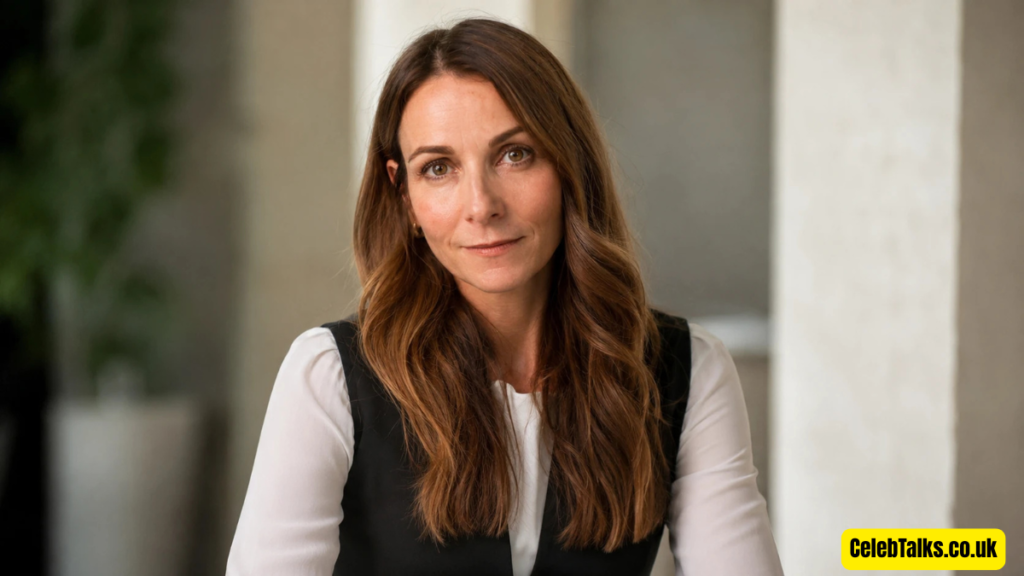

Annabel Denham is a British journalist, columnist, and Deputy Comment Editor at The Daily Telegraph. Known for her sharp, free-market commentary and fearless opinion writing, she has built her career across think tanks, policy research, and national media. She is one of the most recognisable voices in contemporary UK political journalism.
The Woman Behind the Byline
If you’ve been reading political commentary in Britain over the last few years, you’ve almost certainly come across Annabel Denham’s name. She writes with the kind of confidence that’s hard to fake — the sort that only comes from genuinely knowing your subject inside out.
Based in London, she has built a remarkable career across journalism, public policy, and think-tank communications, earning recognition for her clear-cut reasoning, courageous commentary, and commitment to open debate on issues often avoided in mainstream conversation.
So who exactly is she? And why does her work matter to everyday readers who just want to understand what’s going on in Britain? Let’s walk through it.
Her Background: Where It All Started
Education and Early Life
Annabel Denham attended the University of Manchester, where she earned a BA in History and French. This diverse educational base provided her with a critical perspective on both cultural and historical issues, influencing her approach to current affairs.
That combination of history and French might seem an unusual foundation for a political commentator — but think about it. History teaches you how power works over time. French gives you a window into how another major European democracy thinks. Together, they built someone who doesn’t just react to today’s headlines — she contextualises them.
Starting in Westminster
Annabel Denham’s career began in the world of political research and communication. She worked as a parliamentary researcher for Lord Peter Lilley, a prominent British politician, which gave her firsthand experience in the political sphere. This role allowed her to gain a deep understanding of the intricacies of policy-making, political negotiations, and the functioning of government.
Working inside Westminster at the start of your career is a bit like learning to cook in a professional kitchen. You quickly learn the difference between how policies are sold to the public and how they’re actually constructed behind closed doors. That grounding stays with you.
Building a Public Voice: The Think Tank Years
The Entrepreneurs Network
Denham’s professional growth continued at The Entrepreneurs Network (TEN), where she served as Associate Director and later Programmes Director. She was instrumental in launching the Female Founders Forum, an initiative that highlights barriers faced by women entrepreneurs while advocating for more inclusive economic policies.
This chapter of her career matters more than people often give it credit for. The Female Founders Forum wasn’t just a talking shop. It was a practical effort to shine a light on a real, structural problem — the gap between the support available to male and female entrepreneurs in the UK. She authored and contributed to reports on women in the workplace, entrepreneurship, and economic participation, which added depth to her public image, particularly on issues relating to gender, work, and enterprise.
The IEA: Finding Her Platform
Denham’s next significant role was with the Institute of Economic Affairs (IEA), one of the UK’s leading free-market think tanks, where she served as Director of Communications, playing a key role in shaping the IEA’s media strategy and public outreach.
The IEA was the place where her public profile really took off. She wasn’t just writing internal briefings — she was taking positions in national newspapers, appearing on broadcast media, and making the case for economic liberalism in plain, punchy language.
Her tenure at the IEA coincided with significant economic challenges, including the COVID-19 pandemic’s economic impact, Brexit’s implementation, and debates over government spending and taxation. She helped articulate the institute’s positions on these critical issues while engaging with policymakers, journalists, and the public.
During that period, she wrote for The Spectator, The Times, and other major outlets. Ahead of the Spring Statement, she assessed the fiscal landscape facing the Chancellor, arguing that unless the government cut taxes, the cost of living crisis would continue to hurt struggling households.
What She Stands For: Her Core Views
This is where things get interesting — and, honestly, where opinions tend to split.
Free Markets and Economic Liberalism
Annabel Denham is often associated with a centre-right political stance, favoring free-market economic policies and advocating for individual liberties. Her commentary frequently touches on the importance of economic freedom, deregulation, and policies that promote entrepreneurship and innovation.
She’s not someone who hides this. In one notable piece for The Times, she wrote about the need for Britain to embrace economic liberalism and fight against the growing big government consensus emerging in British politics, arguing that “classical liberals have long found themselves at odds with the Conservatives across a range of policy areas.”
Brexit and British Sovereignty
Denham is a strong proponent of Brexit, advocating for the UK’s sovereignty and the benefits of leaving the European Union. She has written extensively on the need for economic reforms post-Brexit and has been a vocal supporter of policies that encourage self-sufficiency and domestic economic growth.
Climate Change: A Nuanced Take
She doesn’t dismiss climate change — but she challenges the approach governments are taking. She questions why so much emphasis has been placed on diplomacy at climate conferences, rather than affordable innovative green technology, and argues for market-based solutions rather than heavy-handed government mandates.
That’s a position that frustrates some readers and resonates strongly with others. Whether you agree or not, it’s a coherent, argued position — not a reflexive one.
The Telegraph Years: Reaching the Mainstream
In 2023, Annabel Denham joined The Telegraph as Deputy Comment Editor, a position that has amplified her influence in British media. In this role, she not only contributes thought-provoking opinion pieces but also guides commentary on pressing national issues.
Her columns regularly appear on the opinion pages of The Telegraph, and her writings often extend to syndication on major platforms such as Yahoo News and MSN UK.
The move to The Telegraph wasn’t just a career step — it was a natural home. The paper’s readership skews towards exactly the audience that takes economic and political commentary seriously, and Denham’s writing style suits the platform well.
Broadcast Media Presence
It’s not just the written word either. Annabel Denham is a frequent contributor to The Spectator, where her Coffee House columns engage readers on politics, business, and society. She also appears regularly on Sky News and the BBC, where she offers commentary on economic policies and current affairs.
What we observe in her broadcast appearances is something journalists often struggle with on TV: she translates complex economic arguments into language that doesn’t make your eyes glaze over. She speaks like she writes — directly, without unnecessary padding.
What Makes Her Writing Style Stand Out
Plenty of political commentators talk about the same issues Denham covers. So why does her work cut through?
A few reasons stand out when you read her work closely:
- She takes clear positions. You always know where she stands. There’s no hedging-every-paragraph ambiguity that plagues a lot of opinion writing today.
- She writes for readers, not for other journalists. Her arguments assume you’re smart enough to follow them — but she doesn’t assume you’ve spent years inside the Westminster bubble.
- She challenges fashionable thinking. She consistently demonstrates intellectual independence — refusing to follow fashionable thinking or political trends.
- She connects economics to everyday life. When she writes about tax policy or regulation, it’s always anchored to what it means for real people — small business owners, working families, entrepreneurs trying to grow something.
The Female Founders Forum: A Legacy Worth Noting
This often gets overlooked in profiles of Denham, but it genuinely matters. Her supporters admire her clear free-market stance and advocacy for women entrepreneurs.
At a time when the conversation about women in business was often stuck at surface level, Denham helped push it into the realm of actual policy. The Female Founders Forum she helped build at The Entrepreneurs Network addressed real, structural issues — access to funding, regulatory environments, mentorship gaps — rather than just celebrating successful women in abstract terms.
Criticism and Controversy
No influential commentator escapes criticism — and Denham is no exception.
While her supporters admire her clear free-market stance and advocacy for women entrepreneurs, critics often challenge her forthright style and uncompromising commentary.
Those on the political left frequently push back against her economic positions, arguing that free-market solutions underestimate structural inequalities. Some critics feel her support for deregulation overlooks workers’ protections.
This is worth acknowledging honestly. She writes from a specific ideological perspective — economically liberal, broadly centre-right — and that lens shapes what she emphasises and what she downplays. Understanding that context helps you read her work more critically and get more out of it, whatever your own politics.
FAQ: What People Ask About Annabel Denham
Who is Annabel Denham and what is she known for? Annabel Denham is a British journalist and Deputy Comment Editor at The Daily Telegraph, known for her free-market economic commentary and sharp political analysis. She previously served as Director of Communications at the Institute of Economic Affairs (IEA) and has written for The Spectator, The Times, and other major publications.
What are Annabel Denham’s political views? She holds broadly centre-right, economically liberal views — favouring free markets, deregulation, low taxes, and individual liberty. She is a strong Brexit supporter and has consistently argued against excessive government intervention in both business and personal life.
Where can I read Annabel Denham’s work? Her columns appear regularly on the opinion pages of The Daily Telegraph, and she contributes to The Spectator‘s Coffee House blog. Her pieces are also syndicated across platforms including Yahoo News and MSN UK. She appears on BBC News and Sky News as a broadcast commentator.
Did Annabel Denham work at the IEA? Yes. She served as Director of Communications at the Institute of Economic Affairs, one of Britain’s oldest and most prominent free-market think tanks. Her time there coincided with major national debates around Brexit, the COVID-19 pandemic, and economic recovery — and it was during this period that she built her national profile.
What is Annabel Denham’s educational background? She studied at the University of Manchester, graduating with a BA in History and French. That background in historical analysis and international perspective informs the way she approaches current political and economic debates.
Why She’s Worth Reading — Regardless of Your Politics
Here’s the honest truth: you don’t have to agree with everything Annabel Denham writes to find her worth reading. In fact, some of the most valuable journalism is the kind that challenges your assumptions rather than simply confirming them.
Her work blends data-driven insight with persuasive analysis, making her a prominent voice in contemporary UK media, and her influence extends beyond newspaper columns through broadcast media and contributions to public debate on the issues shaping modern British society.
If you want to understand the free-market, centre-right perspective on British economic and political life — not as a caricature, but as it’s actually argued by one of its sharpest practitioners — Denham’s writing is one of the best places to start.
Start with her Telegraph columns. If a topic catches your attention, dig back into her IEA-era pieces in The Spectator and The Times for deeper context on how her thinking developed. You’ll come away with a much richer understanding of the ongoing debate about what Britain’s economic future could — and perhaps should — look like.
Disclaimer
Disclaimer: The information provided on this website is for general informational and educational purposes only. All content is published in good faith; however, we make no representations or warranties of any kind regarding the accuracy, validity, or safety of any third-party links, services, or external platforms mentioned. Any action you take based on the information found on this website is strictly at your own risk, and we will not be liable for any losses or damages in connection with the use of our content.