
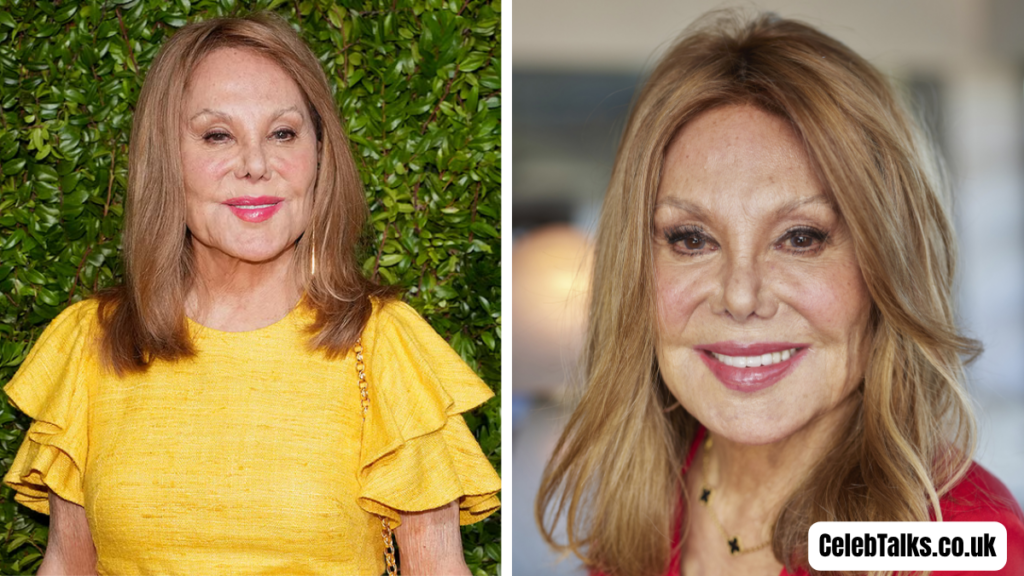

Marlo Thomas is an American actress, activist, and author best known for her groundbreaking role in That Girl (1966–1971) and her decades-long work with St. Jude Children’s Research Hospital. Born on November 21, 1937, she reshaped what women could be on television — and off it.
Why Marlo Thomas Still Matters in 2025
Let’s be honest. A lot of celebrities fade. They have their moment, take their bow, and disappear into nostalgia. Marlo Thomas never got that memo.
She’s been relevant for over six decades — not by accident, not by luck, but by being relentlessly, unapologetically herself. And in a world that spent most of the 20th century telling women to sit down and look pretty, that was genuinely radical.
What makes her story so worth telling right now? Because she didn’t just survive the entertainment industry. She changed it. Then she walked out the door and changed healthcare philanthropy too. Not many people get to say that about one career, let alone two.
The Early Life That Shaped Everything
Growing Up Thomas
Margaret Julia Thomas was born in Detroit, Michigan, but grew up in Beverly Hills, California. Her father? Danny Thomas — one of the most beloved entertainers in American history. You’d think that kind of shadow would be suffocating.
For a lot of kids with famous parents, it is.
But Marlo Thomas found a way to use her father’s legacy as a launchpad rather than a ceiling. She studied at the University of Southern California, earned her teaching degree, and then — smartly — moved to London to study acting away from her father’s spotlight.
That decision tells you everything about her character. She wanted to earn it.
The Struggle Nobody Talks About
Here’s something people often gloss over: before That Girl, Marlo Thomas faced rejection after rejection in Hollywood. Producers saw Danny Thomas’s daughter and assumed she’d be handed roles. She wasn’t. Or they assumed she’d be difficult. She wasn’t that either.
She did regional theater. She did small television parts. She paid her dues like everyone else — arguably harder, because every small role was scrutinized twice as much.
What we observe in looking back at her early career is a pattern of stubborn persistence that most people simply don’t have the stomach for.
How Marlo Thomas Reinvented Television With That Girl
A Show Unlike Anything Before It
In 1966, American television had a very specific idea of what a woman’s story looked like. She was a wife, a mother, or someone waiting to become one. The camera followed her domestic life. Her happiness depended almost entirely on a man.
Then That Girl arrived.
Ann Marie — the character Marlo Thomas created and fought to keep authentic — was a single woman in New York City chasing an acting career. She had a boyfriend, yes. But she didn’t marry him. She didn’t settle down. She kept going.
That was genuinely shocking at the time.
Here’s what made That Girl revolutionary in practical terms:
- It was one of the first shows led by a single, independent woman who wasn’t a widow or a divorcee
- Marlo Thomas held significant creative control over the production — unusual for any actor, almost unheard of for a woman in the 1960s
- The show ran for five seasons and never compromised its central premise
- It influenced an entire generation of television — The Mary Tyler Moore Show, which debuted right after, acknowledged its debt openly
Ann Marie didn’t need rescuing. She needed an audition. That shift — small as it sounds now — was enormous.
The Decision to End It on Her Terms
Here’s a detail that gets buried: Marlo Thomas chose to end That Girl rather than let the network marry Ann Marie off. She refused to wrap up the series with a wedding episode, which was the expected finale for any show about a woman.
She walked away from a hit show. On purpose. To protect the message.
In our assessment of her career, that single decision is probably the most telling thing about who Marlo Thomas is. Ratings, money, network pressure — none of it moved her when the principle was at stake.
The Free to Be… You and Me Era
If That Girl was her television legacy, Free to Be… You and Me might be her cultural one.
Launched in 1972 as an album and later adapted into a television special, Free to Be… You and Me was Marlo Thomas’s project from the ground up. She gathered musicians, writers, poets, and fellow performers — including Harry Belafonte, Diana Ross, and Alan Alda — to create something the world had never quite seen.
The concept was simple: tell children that they can be whoever they want to be, regardless of gender.
Stories, songs, and skits challenged the idea that boys must be tough and girls must be gentle. That housework was women’s work. That crying made boys weak. It tackled these ideas with warmth, humor, and a total lack of condescension.
What it achieved:
- Won an Emmy Award and a Grammy Award
- Reached millions of children across the United States
- Became required viewing in countless elementary schools
- Is still cited by educators, parents, and cultural critics today as a turning point in children’s media
You don’t create something that lasts fifty years by accident. Marlo Thomas understood something that marketing teams still struggle with: speak to people honestly, without talking down to them, and they’ll listen.
Marlo Thomas and St. Jude: A Legacy Built in Her Father’s Honor
The Hospital That Danny Thomas Built
This part of the story starts with her father. Danny Thomas made a promise to St. Jude Thaddeus — patron saint of hopeless causes — that if his career succeeded, he would build a shrine in his honor. He built St. Jude Children’s Research Hospital in Memphis, Tennessee, opening it in 1962.
The mission was bold and specific: no child would be turned away based on their family’s ability to pay. Race, religion, nationality — none of it mattered. If your child had a life-threatening illness, St. Jude would treat them.
That commitment has never wavered.
How Marlo Thomas Took the Mission Further
When Danny Thomas passed away in 1991, Marlo Thomas stepped into the role of National Outreach Director for St. Jude. And she didn’t just maintain what her father built. She expanded it dramatically.
Under her leadership and advocacy:
- St. Jude’s research is shared freely with scientists worldwide — no patents, no licensing fees, no barriers
- Overall childhood cancer survival rates have risen from 20% when the hospital opened to over 80% today
- Marlo Thomas has helped raise billions of dollars through campaigns, telethons, partnerships, and her own personal advocacy
- The Thanks and Giving campaign, which she spearheaded, brings in tens of millions of dollars each year during the holiday season
What we’ve observed in covering philanthropic work is that celebrity involvement is often superficial. A face on a brochure. Marlo Thomas is a different kind of advocate. She knows the research. She knows the families. She shows up.
Her Books, Advocacy, and Life With Phil Donahue
The Author Side of Marlo Thomas
She’s written multiple books, each one reflecting a different dimension of her thinking:
- “Free to Be… You and Me” (1974) — the companion book to her iconic project
- “The Right Words at the Right Time” (2002) — a collection of stories from public figures about the words that changed their lives
- “Thanks & Giving: All Year Long” (2004) — a children’s book tied to the St. Jude campaign
- “Growing Up Laughing” (2010) — a memoir exploring her childhood, her father’s influence, and her own journey in comedy
- “What Makes a Marriage Last” (2020, co-authored with Phil Donahue) — an honest, touching look at what sustains long-term relationships
That last one is worth pausing on. She married Phil Donahue in 1980, and they’ve been together ever since — which is, frankly, remarkable by any standard, let alone Hollywood’s.
The Marriage That Surprised Everyone
When Marlo Thomas married Phil Donahue, she was 42 years old and had never been married before. She had turned down proposals. She had chosen her work. She had lived exactly the life Ann Marie was never allowed to finish on television.
And then she found a partner who genuinely respected her independence.
What Phil Donahue has said publicly — and what Marlo Thomas has echoed — is that their relationship works because neither one of them needed the other. They chose each other. There’s a real difference.
Awards, Recognition, and Her Place in American Culture
The Honours She’s Earned
Marlo Thomas isn’t someone who collected honorary trophies. She earned the real ones:
- Four Emmy Awards
- A Golden Globe Award
- A Grammy Award
- The Presidential Medal of Freedom (2014) — the highest civilian honor in the United States
- The Golden Globe Cecil B. DeMille Award (2023) — recognizing her lifetime of contributions to entertainment
The Presidential Medal of Freedom, awarded by President Obama, cited both her entertainment work and her humanitarian efforts. It’s rare that one person earns that distinction for contributions in two entirely separate fields.
What She Represents for Women in Entertainment
Here’s the straight truth: Marlo Thomas made it easier to be a woman in television. She fought battles in boardrooms and writers’ rooms so that the next generation didn’t have to fight the same ones.
Mary Tyler Moore said it. Teri Garr said it. Countless actresses who came after her acknowledged what she built.
But Marlo Thomas tends to deflect that kind of praise. What you observe in interviews is someone who is genuinely focused on the next thing rather than the last thing. That’s probably why her relevance has never really expired.
What Younger Generations Can Learn From Marlo Thomas
You don’t have to be old enough to remember That Girl to take something useful from her story.
A few things stand out clearly:
- Creative control is worth fighting for. She insisted on it early, and it shaped everything that followed.
- Endings matter as much as beginnings. She ended her most famous show on her own terms, even when it cost her commercially.
- Legacy is built through specificity, not generality. She didn’t just support “charity.” She committed to one hospital, one mission, for decades.
- You can reinvent yourself without losing yourself. Actress to activist to author to philanthropist — the through-line is always the same person.
These aren’t abstract lessons. They’re observable patterns from a life lived with unusual consistency.
Before we wrap up, it’s worth addressing the questions that come up most often when people search for Marlo Thomas — because there are some genuinely good ones that deserve straight, clear answers.
Frequently Asked Questions About Marlo Thomas
What is Marlo Thomas best known for? Marlo Thomas is best known for creating and starring in That Girl (1966–1971), the groundbreaking television series about an independent single woman pursuing her dreams in New York City. She is equally recognized for her lifelong advocacy work with St. Jude Children’s Research Hospital, where she serves as National Outreach Director.
How is Marlo Thomas connected to St. Jude Children’s Research Hospital? St. Jude was founded by her father, Danny Thomas, in 1962. After his passing, Marlo Thomas took over as National Outreach Director and has spent decades raising funds, awareness, and public support for the hospital’s mission to treat childhood cancer regardless of a family’s ability to pay.
Did Marlo Thomas win the Presidential Medal of Freedom? Yes — President Barack Obama awarded Marlo Thomas the Presidential Medal of Freedom in 2014. The honor recognized her combined contributions to American entertainment and humanitarian work, making her one of a small group of individuals recognized for exceptional achievement in both fields.
What was Free to Be… You and Me and why did it matter? Free to Be… You and Me was a 1972 album and television special produced by Marlo Thomas that challenged gender stereotypes for children. It won both a Grammy and an Emmy Award, reached millions of households, and is still considered a landmark piece of children’s media that changed how a generation thought about identity and possibility.
How long have Marlo Thomas and Phil Donahue been married? Marlo Thomas and Phil Donahue married on May 21, 1980, making their marriage over 45 years long as of 2025. Both have spoken publicly about the fact that mutual respect and genuine independence within the relationship have been key to its longevity.
What Her Story Actually Teaches Us
Marlo Thomas spent her career proving that you don’t have to shrink yourself to fit someone else’s expectations — not on television, not in philanthropy, not in marriage.
She built something with That Girl that didn’t exist before she arrived. She carried her father’s dream forward at St. Jude and made it bigger and more impactful than he could have managed alone. She wrote books that actually helped people. She raised a family while doing all of it.
If you’re looking for a role model who doesn’t require you to believe in perfection — just persistence — Marlo Thomas is one of the most honest examples you’ll find.
Her life isn’t a fairytale. It’s a blueprint.
Take another look at how she handled creative control, how she chose to walk away from success when success was compromising her values, and how she showed up for St. Jude year after year without fanfare. Then ask yourself: what would you do differently if you borrowed even a little of that approach?
Disclaimer
The information provided on this website is for general informational and educational purposes only. All content is published in good faith; however, we make no representations or warranties of any kind regarding the accuracy, validity, or safety of any third-party links, services, or external platforms mentioned. Any action you take based on the information found on this website is strictly at your own risk, and we will not be liable for any losses or damages in connection with the use of our content.