
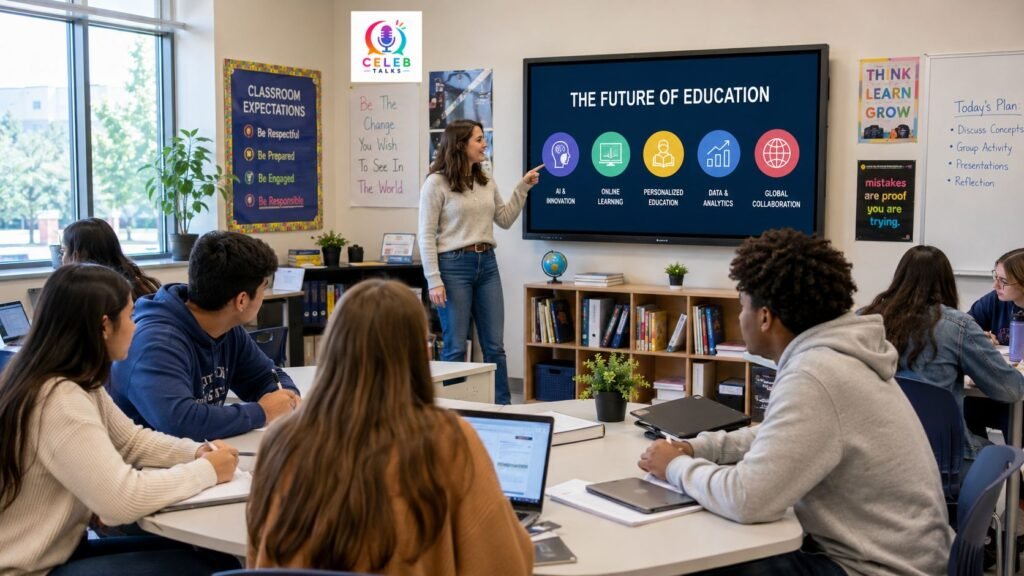

Droven io Tech Education Trends is evolving faster than ever before. Traditional classrooms are no longer the only place where meaningful learning happens. Thanks to rapid technological advancements, students, teachers, educational institutions, and businesses are embracing digital solutions that make learning more flexible, personalized, and engaging. As technology continues to reshape the educational landscape, understanding the latest trends has become essential for anyone involved in education.
Droven io Tech Education Trends highlights the innovations driving the future of learning. From artificial intelligence and virtual classrooms to personalized education and immersive technologies, today’s educational ecosystem is becoming smarter, more connected, and more accessible than ever before.
Quick Bio
| Information | Details |
|---|---|
| Article Title | Droven io Tech Education Trends: The Future of Digital Learning, AI, and Educational Innovation |
| Category | Technology & Education |
| Primary Focus | Emerging education technology trends and digital learning innovations |
| Industry | EdTech (Educational Technology) |
| Target Audience | Students, educators, institutions, and technology enthusiasts |
| Purpose | To explain how modern technologies are transforming education and learning experiences |
| Key Information | Details |
|---|---|
| Main Technologies | Artificial Intelligence (AI), Cloud Computing, VR, AR, Learning Management Systems |
| Learning Trends | Personalized learning, mobile learning, hybrid education, microlearning |
| Major Benefits | Flexible learning, improved engagement, personalized education, global accessibility |
| Future Outlook | Smarter classrooms, AI tutors, immersive learning, data-driven education |
| Key Challenges | Digital divide, cybersecurity, teacher training, technology costs |
| SEO Focus Keyword | Droven io Tech Education Trends |
The Rise of Digital Learning
Digital learning has shifted from being an alternative option to becoming a mainstream educational model. Schools, universities, and corporate training programs increasingly rely on digital platforms to deliver high-quality education regardless of location.
Modern learners expect flexibility. They want to study on their own schedule, access resources from multiple devices, and learn at their own pace. Digital education provides exactly that.
Some key advantages include:
- Learning from anywhere
- Flexible schedules
- Interactive educational content
- Cost-effective training
- Easy collaboration
- Continuous skill development
These benefits have encouraged institutions worldwide to invest heavily in educational technology.
Artificial Intelligence Is Transforming Education
Artificial intelligence (AI) is one of the biggest innovations changing education today. AI is making learning more personalized, efficient, and data-driven.
Instead of offering identical lessons to every student, AI-powered systems analyze learning behavior, strengths, weaknesses, and progress to recommend customized study paths.
Some common AI applications include:
Intelligent Tutoring Systems
AI tutors provide instant explanations, answer questions, and guide students through difficult concepts without waiting for classroom assistance.
Automated Grading
Teachers spend less time grading assignments while receiving detailed performance analytics for each student.
Personalized Learning Recommendations
Learning platforms suggest lessons, quizzes, and resources based on individual progress.
Predictive Analytics
Schools can identify students who may require additional academic support before they fall behind.
As AI technology becomes more advanced, educational experiences will become increasingly adaptive and personalized.
Personalized Learning Is Becoming the Standard
Every learner is different. Some students learn visually, while others understand concepts better through reading, practice, or discussion.
Traditional education often follows a one-size-fits-all approach, but modern educational technology allows personalized learning experiences.
Adaptive learning platforms adjust:
- Lesson difficulty
- Learning pace
- Practice exercises
- Assessment methods
- Revision materials
This creates more effective learning experiences while improving student confidence and motivation.
Virtual Classrooms Continue to Expand
Virtual classrooms have become a permanent part of education rather than a temporary solution.
Modern online classrooms include:
- Live video lectures
- Interactive whiteboards
- Real-time collaboration
- Breakout discussion rooms
- Shared assignments
- Recorded sessions
Students can participate from anywhere while maintaining meaningful interaction with teachers and classmates.
Hybrid education models, combining online and face-to-face learning, are expected to dominate the coming years.
Cloud Technology Powers Modern Education
Cloud computing has simplified how educational institutions manage learning resources.
Instead of relying on physical storage or local computer systems, schools now use cloud-based platforms for:
- Student records
- Assignments
- Learning materials
- Video lectures
- Collaborative projects
- Online assessments
Cloud technology enables seamless access across smartphones, tablets, laptops, and desktop computers.
Teachers can update course materials instantly, ensuring students always have access to the latest content.
Learning Management Systems Are More Powerful Than Ever
Learning Management Systems (LMS) have evolved into comprehensive educational ecosystems.
Modern LMS platforms allow educators to:
- Create courses
- Upload multimedia lessons
- Track attendance
- Manage assignments
- Conduct examinations
- Analyze student performance
- Communicate with learners
Students benefit from centralized access to everything they need for successful learning.
As educational institutions continue embracing digital transformation, LMS platforms remain one of the most valuable technologies available.
Gamification Improves Student Engagement
Learning becomes more enjoyable when educational content includes game-like elements.
Gamification introduces features such as:
- Achievement badges
- Leaderboards
- Progress tracking
- Rewards
- Challenges
- Interactive quizzes
These techniques increase motivation while encouraging healthy competition and active participation.
Students often retain information better when lessons feel engaging rather than repetitive.
Virtual Reality and Augmented Reality Create Immersive Learning
Virtual Reality (VR) and Augmented Reality (AR) are revolutionizing practical education.
Instead of simply reading about a topic, students can experience it firsthand.
Examples include:
- Medical students practicing surgical procedures
- Engineering students exploring machinery
- History students visiting ancient civilizations virtually
- Science students performing laboratory simulations
- Architecture students examining 3D building models
Immersive learning improves understanding by combining visual, interactive, and experiential education.
Mobile Learning Continues to Grow
Smartphones have become powerful educational tools.
Mobile learning allows students to:
- Watch lectures
- Complete assignments
- Read digital textbooks
- Practice quizzes
- Join discussions
- Access educational apps
Since nearly everyone carries a smartphone, mobile education increases accessibility for learners worldwide.
Educational institutions increasingly optimize learning materials specifically for mobile devices.
Microlearning Is Changing Skill Development
Attention spans have become shorter, making lengthy educational sessions less effective for many learners.
Microlearning delivers information through short, focused lessons that typically last between five and fifteen minutes.
Examples include:
- Short videos
- Interactive flashcards
- Mini quizzes
- Quick tutorials
- Bite-sized lessons
This approach supports continuous learning while fitting into busy schedules.
Corporate training programs especially benefit from microlearning because employees can develop skills without interrupting their workday.
Data Analytics Supports Better Educational Decisions
Educational institutions collect valuable learning data every day.
Advanced analytics helps schools understand:
- Student participation
- Course completion rates
- Learning challenges
- Performance patterns
- Attendance trends
- Skill development
Teachers use these insights to improve lesson planning while administrators make informed decisions about curriculum improvements.
Data-driven education ultimately leads to better learning outcomes.
Cybersecurity Is Essential in Digital Education
As education becomes increasingly digital, protecting student information has become a top priority.
Educational institutions must safeguard:
- Student records
- Financial information
- Examination data
- Online accounts
- Research documents
Strong cybersecurity measures include:
- Multi-factor authentication
- Secure cloud storage
- Encrypted communications
- Regular security updates
- User awareness training
Protecting educational data builds trust among students, parents, and institutions.
Blockchain Technology Has Educational Potential
Blockchain is emerging as an innovative solution for educational credential management.
Possible applications include:
- Digital certificates
- Verified academic records
- Secure transcripts
- Professional certifications
- Credential verification
Blockchain reduces fraud while simplifying verification for employers and educational institutions.
Although still developing, this technology may significantly improve record management in education.
Lifelong Learning Is Becoming Essential
Technology changes rapidly, making continuous education increasingly important.
Professionals now regularly update their knowledge through:
- Online certification programs
- Professional development courses
- Digital workshops
- Industry webinars
- Self-paced learning platforms
The future workforce will depend on lifelong learning to remain competitive in evolving industries.
Educational technology supports this by making learning available anytime and anywhere.
The Growing Importance of Soft Skills
While technology automates many technical tasks, human skills remain highly valuable.
Modern education increasingly focuses on developing:
- Communication
- Leadership
- Creativity
- Problem-solving
- Emotional intelligence
- Critical thinking
- Team collaboration
Technology enhances the learning process but cannot replace these essential human capabilities.
Balanced education combines technical expertise with interpersonal skills.
Challenges Facing Educational Technology
Despite its many advantages, educational technology still faces several challenges.
Some common concerns include:
Digital Divide
Not every learner has reliable internet access or modern devices.
Teacher Training
Educators require ongoing professional development to effectively use new technologies.
Data Privacy
Schools must carefully protect sensitive student information.
Screen Fatigue
Excessive screen time may reduce concentration and affect overall well-being.
Technology Costs
Implementing advanced educational systems requires significant investment.
Addressing these challenges will help ensure equal opportunities for learners everywhere.
What the Future of Educational Technology Looks Like
The next generation of educational technology will become even more intelligent, immersive, and personalized.
Future innovations may include:
- AI-powered learning assistants available 24/7
- Fully immersive virtual classrooms
- Real-time language translation during lessons
- Advanced learning analytics
- Global collaborative classrooms
- Intelligent career guidance systems
- Highly adaptive digital textbooks
These technologies will continue transforming education into a more engaging, inclusive, and effective experience.
Why Droven io Tech Education Trends Matter
Keeping up with educational technology trends is essential for educators, students, businesses, and policymakers. Understanding innovations like artificial intelligence, cloud learning, immersive technologies, and personalized education helps institutions prepare for the future while improving learning outcomes today.
Droven io Tech Education Trends provides valuable insight into how digital transformation is reshaping classrooms, professional training, and lifelong education. By staying informed about emerging technologies, organizations can make smarter decisions, adopt effective teaching strategies, and equip learners with the skills needed for tomorrow’s digital world.
They refer to the latest developments in educational technology, including AI-powered learning, digital classrooms, cloud-based education, personalized learning, and immersive technologies that improve teaching and learning experiences.
AI helps personalize learning, automate grading, provide intelligent tutoring, analyze student performance, and recommend customized learning paths based on individual needs.
Digital learning offers flexibility, accessibility, lower costs, and the ability to learn from anywhere using connected devices, making education more convenient for students and professionals.
Conclusion
The future of education is being shaped by technology at an unprecedented pace. Artificial intelligence, cloud computing, virtual classrooms, mobile learning, immersive experiences, and data analytics are transforming how knowledge is delivered and acquired. Rather than replacing teachers, these innovations empower educators to create more personalized, engaging, and effective learning environments.
As educational institutions continue embracing digital transformation, success will depend on balancing advanced technologies with human-centered teaching. By following the latest Droven io Tech Education Trends, educators, students, and organizations can confidently navigate the evolving landscape of digital learning and prepare for a future where education is more accessible, innovative, and impactful than ever before.