


Buying your first hookah (or upgrading your old one) is fun, but a good session starts before you ever light a coal. It starts with picking the right gear. Many new smokers-and even people with experience-make the same buying mistakes.
Everyone has their own way of packing and smoking, but the basic quality and fit of your equipment affects everyone. If you ignore a few key points when shopping, you may end up with harsh smoke, weak flavor, air leaks, or gear that breaks too soon.
With a little planning, you can shop with confidence and build a setup that gives you smooth, tasty sessions for a long time. If you want quality options and helpful guidance, Shisha Boutique is a solid place to start.
1. Confusing Price with Quality
Many people assume an expensive hookah must be better, or that a cheaper hookah must be bad. Neither is always true. Very cheap hookahs (often around $30-$50) often use low-quality metal and weak parts, which can cause air leaks, rust, breakage, and even strange flavors.
At the same time, buying the most expensive hookah doesn’t always mean you’ll get a much better session. Some high-end models focus heavily on looks, without giving the same improvement in performance.
For many beginners, the best value is usually in the middle range. A good modern hookah in the $50-$150 range, or a starter set around $79 (like the Icon Stick), often gives a strong mix of durability, easy use, and fair pricing. These options perform well without a huge upfront cost, and they let you learn what you like before spending more later.
2. Ignoring Material and Build Durability
How long your hookah lasts-and how well it works-depends a lot on the materials and how it’s put together. Low-quality metals commonly lead to leaks, rust, and weak joints that fail over time. Instead, aim for hookahs made from materials that resist rust and hold up well, such as stainless steel, brass, copper, or aluminum. Many modern hookahs use stainless steel for key parts, which also makes cleaning easier and helps the hookah last longer.
Glass hookahs can look great and are often easy to rinse, but they can break easily. Acrylic hookahs are tougher, but they can be harder to clean fully. Mixed-material designs (like silicone with metal, or glass with ceramic) can give a nice balance of strength and easier cleaning. Buying better materials from the start helps you avoid replacing parts early and keeps sessions consistent.
3. Choosing an Impractical Size or Number of Hoses
A lot of buyers fall into the “bigger is better” idea with hookah size. A tall hookah can look impressive, but height usually doesn’t make a big difference in how it smokes. Very small hookahs can sometimes make smoke feel warmer because the stem is shorter, but many modern small hookahs are built to reduce this issue. What matters most is picking a size that matches how you actually smoke.
If you smoke alone or with one other person, a mini or medium hookah is usually plenty, and it’s easier to store and carry. Large hookahs make more sense for groups and can cost more than you really need for solo use. The same goes for hoses: multi-hose hookahs (like the Icon Quattro) can be great for groups, but they can also create draw problems if the seals aren’t tight or if several people pull at once. For a first hookah, a single-hose setup is usually the easiest way to learn the basics without extra problems.
4. Overlooking Essential Accessories
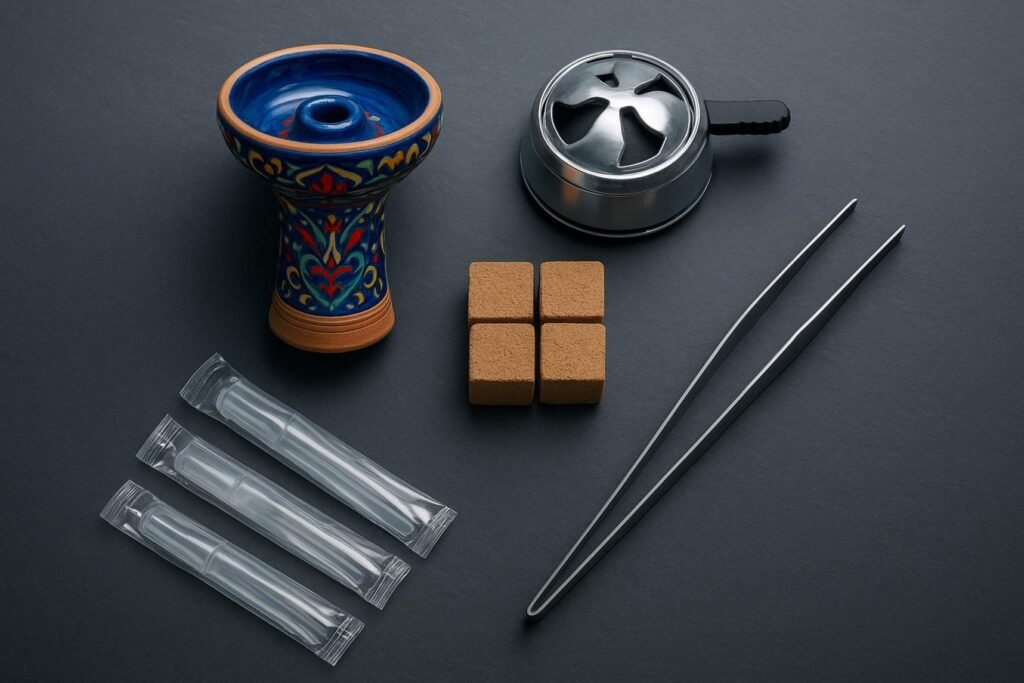
Buying the hookah pipe alone doesn’t give you a complete setup. Many beginners focus on the pipe and forget the accessories that shape the session. Besides the base, stem, and hose, you’ll need a good bowl, a tray to catch ash, and tongs for handling hot coals.
Heat control matters a lot. Foil is a simple and cheap way to start, but a Heat Management Device (HMD) is a great upgrade because it gives more steady heat and a more even session. Bowl choice also matters: vortex and phunnel bowls have a raised center with holes on the side, which helps keep molasses from dripping down into the stem, so your shisha stays moist and flavorful longer.
Also pay attention to charcoal: natural coconut coals usually taste cleaner and last longer than quick-light coals. And if you share with others, personal mouth tips are a must for hygiene.
5. Skipping Brand Research and Warranty Checks
There are a lot of hookahs on the market, and it can be hard to tell what’s dependable and what’s just a trend. That’s why brand research helps. Well-known makers like Alpha Hookah, Aeon, Wookah, and El Bomber are often recognized for solid design, durable materials, and good customer support. Brands with a strong track record are more likely to sell gear that lasts and performs well.
Warranties matter too. A company that offers a strong warranty, like Kaloud’s five-year coverage on some items, is showing confidence in what they sell. A good warranty helps protect your money if you run into a manufacturing issue.
6. Not Considering Cleaning Requirements
A dirty hookah can ruin a session. Old flavors, sticky residue, and even mold from poor cleaning can cause bad taste, restricted airflow, and hygiene problems. So while shopping, think about how easy the hookah will be to clean.
Many modern hookahs are built with parts that come apart easily, like the Moze Breeze Two with magnetic connections, which makes cleaning much faster. Washable silicone hoses are now common and help prevent leftover flavors from sticking around, which is a big improvement over older non-washable hoses.
Traditional one-piece hookahs can be strong, but their tighter spaces can be harder to scrub. Choosing gear that’s easy to clean saves time and helps your sessions stay fresh.
7. Buying from Unreliable Retailers
Where you buy your hookah can matter almost as much as what you buy. Sellers with poor reputations may sell fake products, offer weak customer service, or make returns and warranty claims difficult. Local smoke shops let you see items in person, but their selection may be small, and hookahs may not be their main focus.
Specialized online stores often offer a larger selection, better prices, and fast shipping. No matter where you shop, pick sellers known for authentic products, clear return policies, and helpful support. A trustworthy retailer makes the whole purchase process smoother and safer.
8. Opting for Style Over Functionality
It’s easy to buy a hookah because it looks cool, but choosing style over function is a common mistake that can hurt your session. A good-looking hookah is nice to own, but performance is what matters most. Many beginners think the pipe itself controls the whole session, but in many cases the bowl and heat control setup make a bigger difference.
For example, an older style bowl with a large bottom hole can let molasses drip down and waste flavor. A phunnel or vortex bowl keeps the shisha in place and helps it stay flavorful longer. Also, a hookah with poor design can smoke badly even if it looks great-tight draw, weak purge, and a frustrating session.
The goal is a balanced session with good flavor, an easy draw, steady heat, and a solid session length. Big clouds are a bonus, but the basics give the best results.
Final Considerations Before Making Your Purchase
Checklist for Avoiding Hookah Buying Mistakes
Hookah smoking is personal, and your preferences can change over time. People pack bowls differently, like different airflow levels, and mix flavors in their own way. Still, all of that depends on having the right equipment. Knowing the common buying mistakes isn’t just about avoiding bad sessions-it helps you get smoother smoke, longer sessions, and better flavor.
Before you buy, use this checklist as a simple guide (not strict rules). Focus on how the hookah works and what it’s made of, not just how it looks. Think about your lifestyle: do you need something portable and easy to clean, or something larger that stays in one place? Make sure you budget for the must-have accessories-good bowl, natural coals, and basic cleaning tools are part of the setup.
After you get a new hookah, the first setup also matters: wash all parts with warm water and mild soap to remove factory residue, check that grommets fit tightly so the hookah seals well, and fill the base so the downstem sits about one inch under water (don’t overfill). And remember the learning process: the best sessions come from understanding heat, airflow, and packing-not from owning the most expensive hookah. With practice and patience, each session helps you improve.